

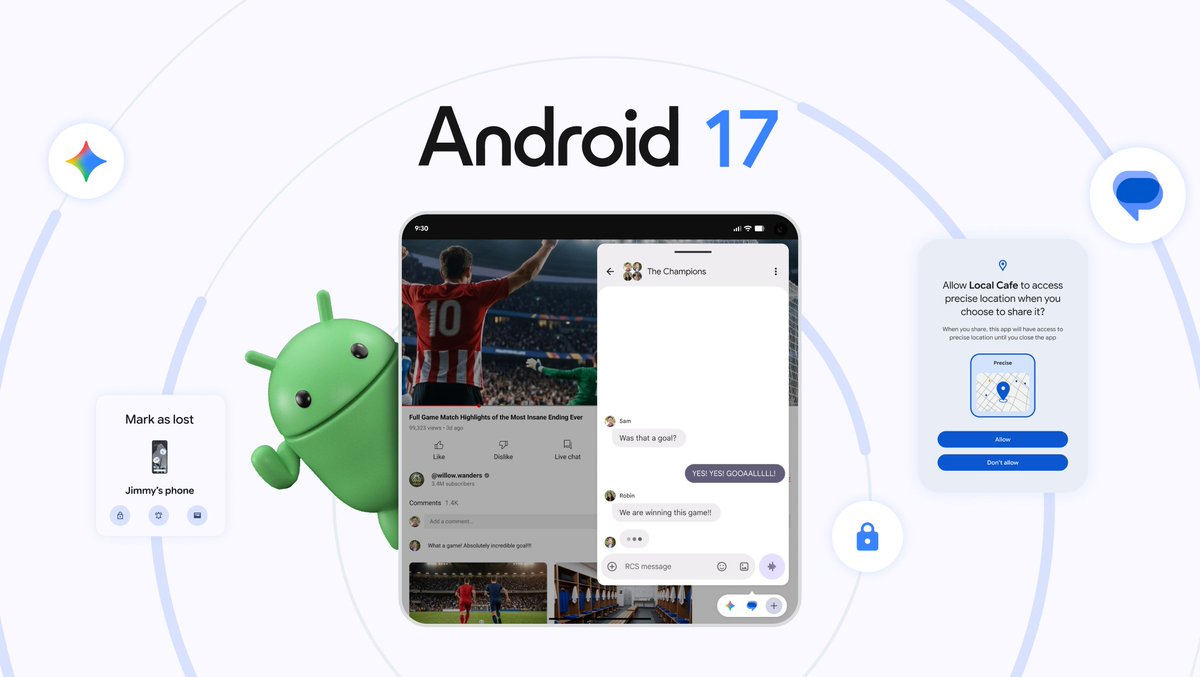
Android 17 has finally arrived, plus its story runs a bit different this time. On June 16 Google released this update's stable version, Pixel phones received it first, from Pixel 6 up through every new model. In inner circles its sweet name is Cinnamon Bun, plus its fun proof hides right before your eyes, a tiny cinnamon bun image now appears when system notifications arrive. Let me say that honest word first, this is no era-changing upheaval. By 9to5Google's count, notable changes number merely around 40. But here's that real point, these small changes are exactly what daily use feels most. Let's see them one by one.
That change pleasing most people sounds completely plain: separate Wi-Fi plus mobile data toggles have returned. Years ago Google merged both into one internet button, so even switching off just Wi-Fi demanded extra taps inside. In Android 17, quick settings again holds two separate buttons, tap an icon for on-off, tap its text for a full menu. A thing wanted year after year finally arrived.
Its second big addition carries a name, bubble bar. Earlier only messaging apps could float as bubbles, now any app can become a floating window, plus up to four separate app bubbles stay open together. A video plays on YouTube, a notes app floats above it, a calculator beside it, for multitasking this is a genuinely useful thing. On tablets plus folding phones this feature grew even richer thanks to a new taskbar.
For gamers came a wonderful gift, especially for foldable owners. In its new game mode, a folding phone's screen splits in two: its top half runs a game, its bottom half becomes a touch-based gamepad. Meaning that phone turns into a small console right then. Native support for remapping external controller buttons arrived too, something that earlier depended on game makers' whims.
Desktop Mode matured truly this time too. Connecting a phone to a monitor now brings a real taskbar plus status bar, apps open in separate windows, which can be dragged at will, resized or snapped to sides, exactly like a computer. Where Samsung's DeX ruled alone all these years, stock Android just arrived there.
Two things joined screen recording: recording controls now live in a small floating pill-shaped menu, plus choosing that show selfie camera option keeps your face floating over videos, resizable, movable. Need for separate apps ended for making tutorials or reaction videos. Widgets on lock screens arrived alongside too.
Visual polish wasn't small either. Blur effects grew more refined across this whole system, transparency came to that widget picker screen, where wallpapers peek through from behind. App name labels on home screens can now be hidden, for minimalist decoration lovers. Empty space inside settings shrank, a long press on that bottom search button changes its transparency plus color, which apps always open in dark mode can be set separately too. Animations in quick settings plus multitasking turned livelier. One sweet touch too, after finishing all notifications, instead of a dry "No notifications" it now shows "You're all caught up", alongside a tiny trophy.
Its security side hardened too. Identity Check now runs wider, in apps demanding biometrics, entry through PIN alone fails at unfamiliar places, fingerprints or faces become mandatory, meaning even a thief knowing your PIN cannot enter banking apps. Delayed access protection joined OTP codes arriving through SMS, plus theft-blocking Factory Reset Protection grew stricter. Another useful change for tablets plus foldables, those black bars beside apps when rotating vanish, every app must now run across full screens.
An Easter egg exists for fun seekers too. Five taps on Android 17 inside settings brings a constellation of stars, joining those dots makes that Android 17 logo appear, then holding it opens that familiar spaceship game.
More is coming ahead: building new widgets through spoken words, an improved speech-to-text named Rambler, plus a digital wellbeing tool named Pause Point. Now that most vital question remains, when does it reach your phone? Holding a Pixel 6 or newer, it should arrive right now. Samsung's Galaxy S23 through S26 stand confirmed, arriving with One UI 9 between July plus October. On remaining brands like OnePlus, Xiaomi, Motorola, waiting stretches into this year's final part. In broad strokes, holding a good brand's phone from 2023 or later, chances of getting Android 17 run strong. Surprises may be absent, yet as an update smoothing daily life, Cinnamon Bun's sweetness set quite well.
No comments yet. Be the first to comment.