

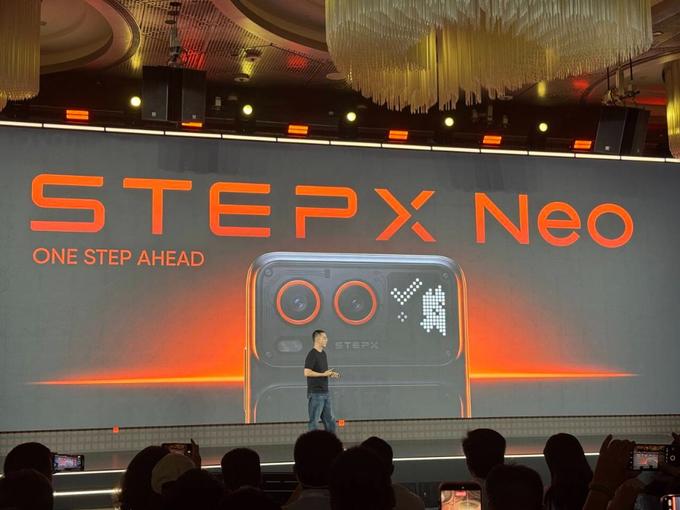
StepX Neo isn't aiming to be another chatbot-enabled phone. StepFun wants it to be more of an assistant that can do tasks rather than just talk about them. The change is significant as it dictates how people should perceive an AI phone.
StepX Neo is being touted by the company, which was established by former Microsoft executive Jiang Daxin in 2023, as a mass-market agentic smartphone. More simply, it's a phone that's designed to receive a request and execute multiple actions without further human involvement. You don't need to launch app after app, let the phone do the work for you.
The most unique attribute of StepX Neo is the unique menu system
The majority of phones that boast AI still require a great deal of effort from you. You have to ask a question, then open another app, copy some text or go through a handful of menus to get anything useful. The reason is that StepX Neo is different from StepFun as the latter has developed Step AOS on its own Amoo agent.
Amoo is inside the operating system and can be used to merge communication, applications, files and system utilities, StepFun says. This means that one request could have multiple actions in series. For instance, the telephone can search for information, switch between the apps, and complete a task without having to be prompted by the user all the time.
StepX Neo also has the ability to remember user habits over time. The system is designed to remember the pattern you typically follow - if you typically book the same type of flight, it will remember that; if you typically reserve the same type of restaurant, it will remember that. When it comes to memory, that's what makes an assistant handy in life.
Another is that it's offline usage. StepFun claims the core agent doesn't necessarily require continuous network access. That really does make a difference, as a lot of the AI features break down when there is limited or no signal. Local processing of core functionality as demonstrated by StepX Neo might be more useful when traveling or in areas with weak signals.
The travel angle is particularly good. StepFun claims that StepX Neo can translate real-time communications, text messages, phone calls and even sign or menu text in 32 languages. It can also assist in scheduling travel, local events, itineraries, customs documents, visa reminders, and with check-in times. That's the thing that always gets people's attention if they're a frequent flyer.
StepFun is also working to make the entire system sound like it is natural, rather than technical. The company says the inputs are a voice and a vision layer, which it calls NUI, that it says will learn how you work. It's a simple concept: You say what you want, and the phone does the rest.
StepX Neo is yet to make its mark in the market.
StepX Neo sounds much like talking a big talk but the real test comes when it's not a demo. The actual measure of whether it works or not is if it works in normal life. Having such a phone is only important if the automation is quick, correct, and believable.
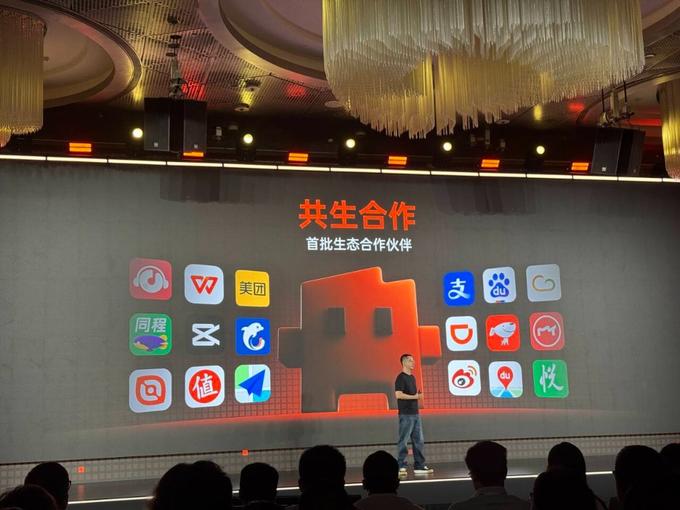
StepFun has partnered with Ctrip, Alipay, Didi, Meituan, WPS and CapCut, it says. This includes travel, payments, ride-hailing, office and content creation. A good beginning but it illustrates the weaknesses of the product. The phone might not seem as special if you're not using those services.
It also claims Step AOS is built from the parts of Android, Linux and RTOS. That's quite a strong assertion to make, and it goes further to explain why StepFun is considering StepX Neo a new category rather than just a typical phone. However, people should not be too concerned with the architecture label; they should be more concerned about stability and usability of the phone.
The system is supposed to feature a memory layer, a tiered decision system and security features like permission control and one-tap undo, says StepFun. Those are good ideas, an agent that can act on your behalf needs guardrails as well. If they are not there, automation becomes a complex mess in no time.
The company also claims to be using its on-device foundation model, Step Edge, for the phone in mobile compute situations. StepFun claims that it's competitive on 29 benchmarks, though it hasn't specified which. That makes the claim more difficult to assess, and should be considered a promising claim, rather than a proven one.
The interesting part of StepX Neo is that it's a real direction for smartphones. The smartest cell phones of the future might not be the ones with the most menus, or the most flashy features. They may work productively and save time, as well.
StepX Neo for the moment, is a good and possible idea. If the software itself is reliable, and the integrations are as well, it may be a major weapon. Otherwise, it will be a clever demo with a good story that will be remembered.
Source and image credit: Via



No comments yet. Be the first to comment.