

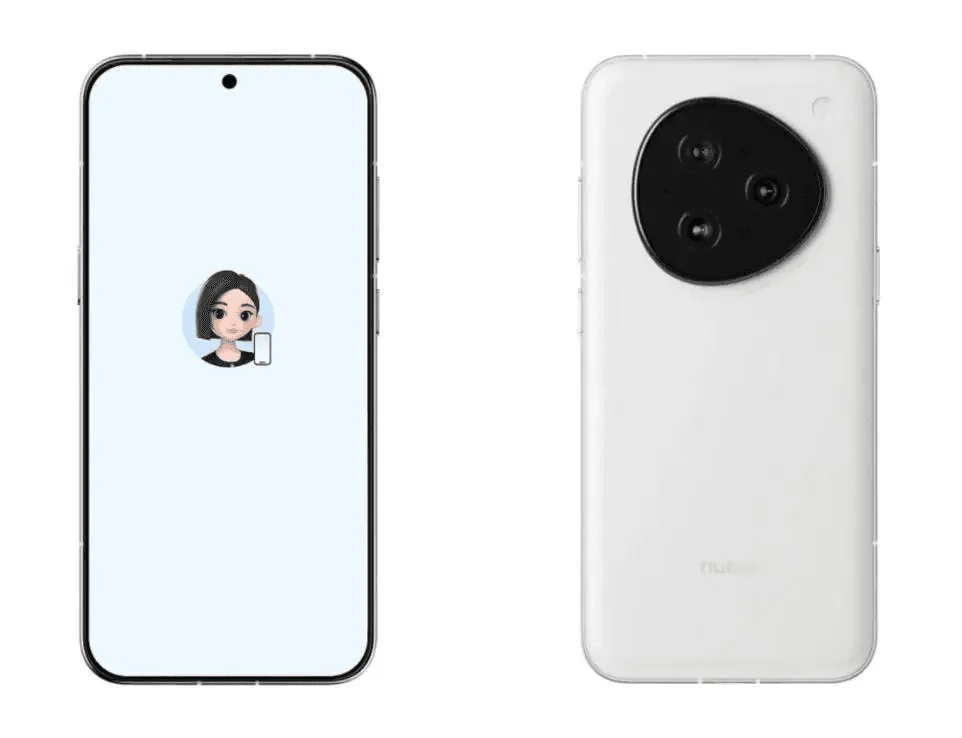
Nubia is preparing to unveil a phone with a unique functionality. The company has announced its new Nubia AI agent smartphone will go public later this month and it's centered around a system-level assistant that can do more than answer questions it can do things for you.
The typical "AI features" offered by most phones these days refer to the chatbots or photo editing apps. Nubia is stepping up its game. The upcoming flagship will enable its AI agent to be part of the operating system, allowing it to operate multiple apps independently.
These are the general things to check out prior to a launch.
ZTE's Mobile Devices division leads by Senior Vice President Ni Fei, who revealed that this phone will be the world's first AI agent phone. It will be released at the 2026 World Artificial Intelligence Conference to be held in Shanghai from July 17 to 20.
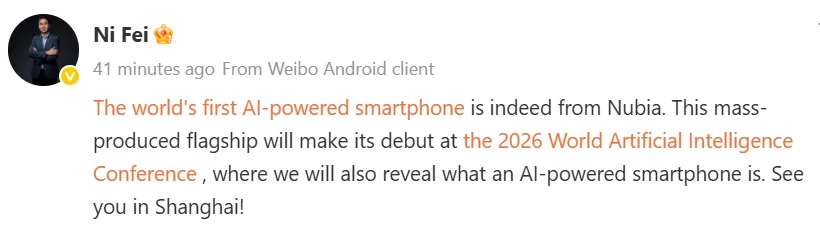
This may well be a commercial version of the Nubia's 2nd-generation Doubao phone project, which has been developed together with ByteDance. The first generation Nubia M153 was released as a technology preview, and was said to sell its initial 30,000 units in a single day. Such demand is not just curiosity, it's a real demand for agent-style phones.
Why Nubia AI Agent is Unique
The regular AI assistants follow instructions. This one is to perform a whole job without you having to touch the screen throughout the process.
For instance, Nubia provides an example: You can instruct the phone to make the lowest possible flight booking to Beijing, it will open the right apps, it will compare prices, input your information, and process payments independently. No app switching. No manual working with forms.
The degree of independence is realized when the two components, namely the GUI agent architecture and the LLM on the device, are combined together. The system can read the UI of the device, as a human would do, and communicate with buttons and menus. Not only does this use app APIs, it can also read the UI the way a human would, and then interact with it directly. ZTE also developed its own scheduling technology, dubbed CoClaw, to enable interoperability between various applications and ecosystems in these multi-step processes.
How it impacts the everyday user
If you can chat with an assistant, who books a flight, orders food or even fills out a form without any hand holding, it would be a real time saver to not have to switch between five apps to complete a task. If Nubia's system lives up to its claims, then it could incentivize other mobile phone manufacturers to go beyond just incorporating some chatbots into their software, and create a fully-fledged task-completing agent.
This will be determined by real world testing however. While API-based automation is technically easier to perform with visual interface automation, errors in a payment step, for instance, have actual implications. It is interesting to observe how Nubia clears up errors and confirms users before important actions.
Who should pay attention?
For tech lovers who are looking for something more than voice assistants for automation, this is one event to keep an eye out for. Those who want to have more of a manual control over their phone may wish to wait and see how the agent fares on their independent rating sites and reviews before they book or pay with the agent.
Nubia has yet to officially announce full specifications, price or availability worldwide. As we approach WAIC 2026, more information should become available.
No comments yet. Be the first to comment.